The words you repeat become the culture you build.
It wasn’t something I crafted with an ulterior motive in mind. It just made its way into the conversation…frequently.
“Elevate the work product.”
I was new in the position. I started with what a lot of leaders do. I asked questions. I listened before deciding. I tried to understand what was working, what wasn’t, and where the gaps were.
The honest answer was this: the work needed to improve. Not bad. But not where it needed to be. Some of what we produced felt more assembled than designed. The work was getting done. But there was a difference between creating something and creating something excellent.
So I kept coming back to it. First in my thoughts…then out loud.
“Elevate the work product.”
I realized I needed a simple way to point to something more. Something better. Something…elevated.
At first, I’m pretty sure, not sure everyone loved it. For a while, I’d hear some version of, “We know, Tim. Elevate the work product.” (Read that again, this time, with heavy eye-roll and a dash of “just kidding”.)
Fair enough.
Sometimes new language feels awkward before it feels useful.
But then something started to happen. The phrase moved. It started showing up in conversations I wasn’t leading. Other people began using it. Then it moved beyond marketing. It showed up on other teams.
That’s when I started to see something.
Language travels. And when language travels, culture follows.
I’m currently reading Will Guidara’s book, Unreasonable Hospitality. I hit a passage recently that named something I had already lived. “Language is how you create a culture.”
I had seen it happen before I had words for it.
When Language Outgrows You
“Elevate the work product” started with marketing, but it never really belonged only to one team. That’s what made it useful. It was simple enough to remember and broad enough to apply.
The social media post can be elevated. A tour can be elevated. A meeting agenda can be elevated. A coaching conversation can be elevated.
Part of the reason it was effective was that the phrase pointed to the output without attacking the person. It created a shared expectation without assigning blame. When you are trying to move a standard, people need clarity. But they also need dignity. The goal is not to shame people into better work. The goal is to call people toward stronger work. It was also effective because it was memorable and easy to point to.
There is a difference.
Two other phrases have traveled in similar ways.
“Have the right people at the table” forced a better question before we started. At a recent strategy session, we invited an Assistant Manager who wasn’t accustomed to sitting in that room. He was nervous. But he brought perspective nobody else had. The result was better for it.
“Water what you want to grow” was another one that I didn’t create. This one was borrowed from another leader. It started as a reminder and encouragement to myself. Again, first in my mind, then out loud as a reminder for everyone else. I kept noticing how easy it is to blow past a win. When you move fast, there is always something next demanding your attention. Progress gets skipped. People go unrecognized. When someone brings a win into the room now, I’ve watched leaders pause, actually pause, before moving on. That pause is the phrase doing its work.
The Language You Didn’t Choose
Here’s the other side. And this is where I’ve missed as a leader.
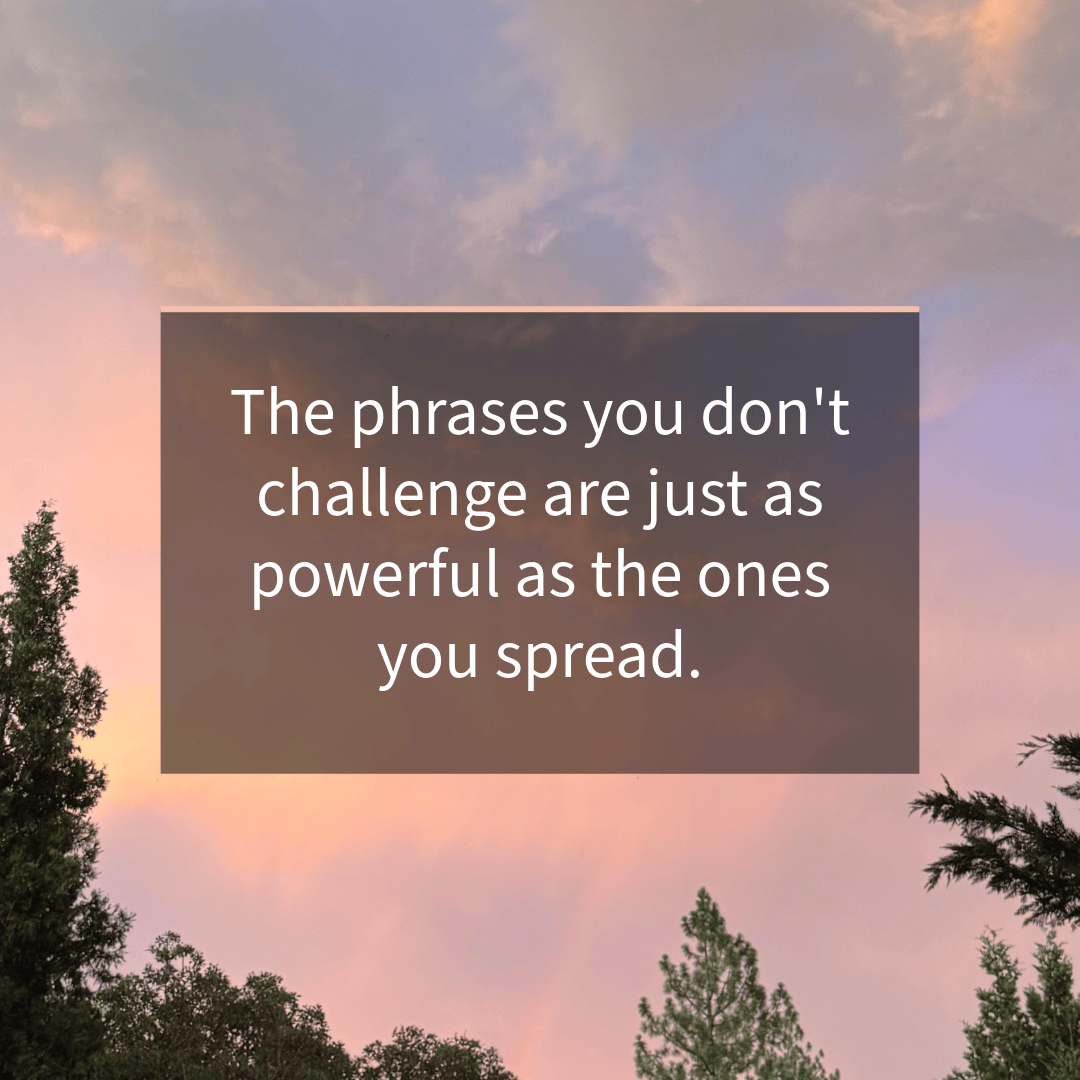
Language shapes culture, whether you’re paying attention or not. Which means the phrases you don’t challenge are just as powerful as the ones you spread.
I’ve let language linger that should have been addressed sooner. You’ve heard the same ones I have. “I’ve told them once.” Or “That’s not really my department.” Or “They know how I feel about it.” Or “We’ve always done it that way.” These all do more damage than we think. They quietly lower the standard. They deflect ownership. They give permission to stop growing. When a leader doesn’t challenge them, behavior follows.
Your Turn
The phrases worth keeping, the ones that you can point to and hold a standard, take on a life of their own. I hear them now in conversations I’m not part of. In meetings I didn’t call. From people using them to point to a standard, in leading a team.
That’s when you know language has started to do its work. Not when the leader says it. When the team says it to themselves.
So, before you think about what phrases you want to spread, start with the uncomfortable audit. What language is already traveling in your organization that you didn’t choose? What phrases are your people repeating that signal low expectations, deflected ownership, or siloed thinking? And how long have you been letting them stay?
Then the harder and more interesting question: when you find language worth keeping, how did you stumble onto it? Because “elevate the work product” wasn’t contrived. I caught myself saying it organically. I noticed it was working. And then I got out of the way and watched it travel.
Guidara closes that same chapter with a challenge worth sitting with: “You must be able to name for yourself why your work matters. And if you’re a leader, you need to encourage everyone on your team to do the same.”
That’s what the right language does. It names what matters. It gives people something clear to carry. And eventually, it stops belonging to you.
It belongs to the team.
Be Encouraged.
You can purchase Will Guidara’s Unreasonable Hospitality and the companion Unreasonable Hospitality: The Field Guide through the associated affiliate links.
Leave a Reply