

Why the Conversations You’re Avoiding Are the Ones That Matter Most
Let me be transparent with you before we go any further: I don’t like hard conversations.
Not in the way that people sometimes say it to seem relatable and then reveal they’re actually quite good at them. I mean genuinely, viscerally, avoid-them-if-at-all-possible don’t like them. Heart rate up. Breathing shallow. Mind racing through every possible way it could go sideways.
And yet here I am, writing a blog post about why we, myself included, need to stop avoiding them.
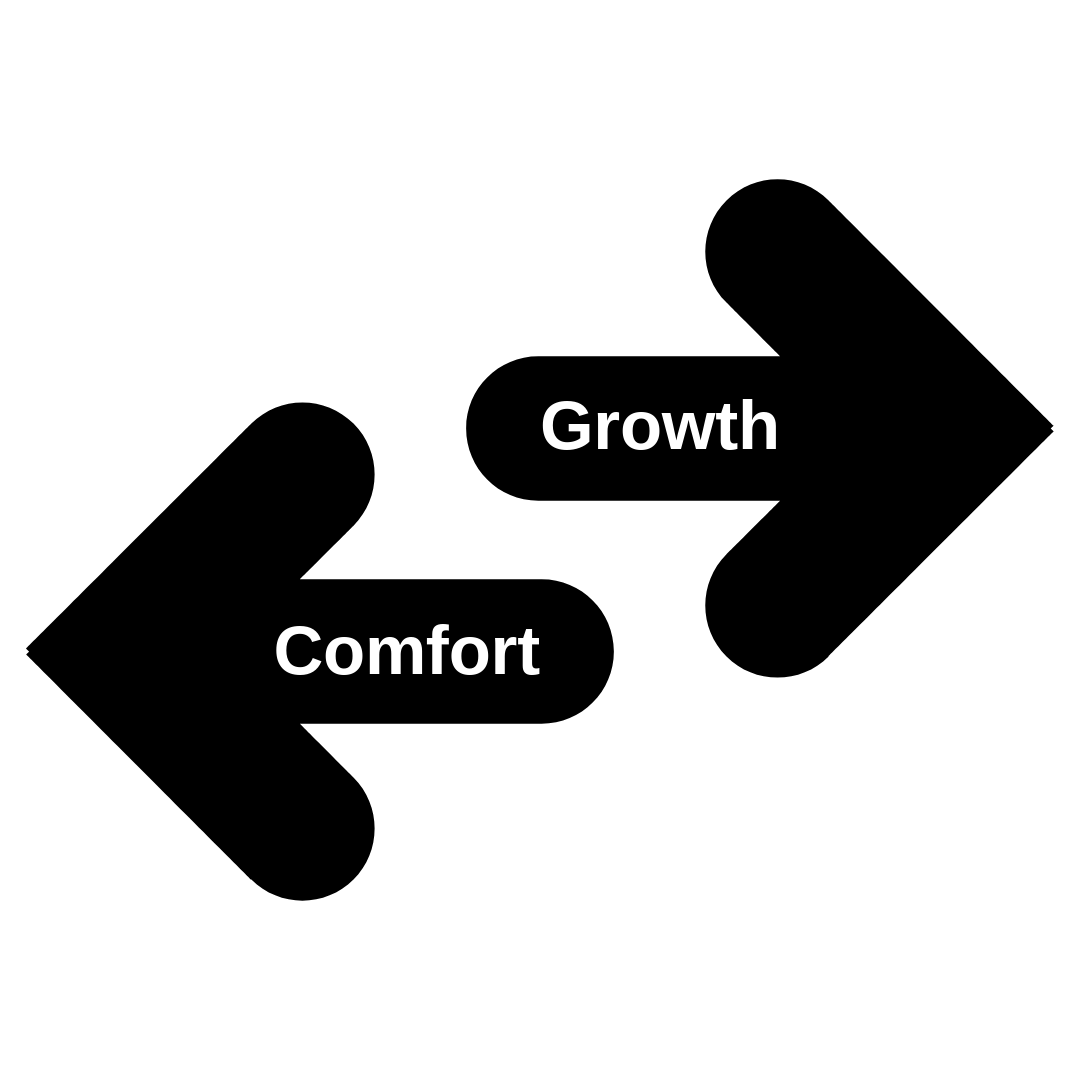
Here’s the tension I’ve had to learn to live in: While I don’t like hard conversations, I do care deeply about people growing, doing better, and becoming more of who they’re capable of being. Those two things don’t coexist peacefully. Eventually, one of them has to win.
If you lead people, whether formally or informally, at work or at home, in an organization or just in the circles of your own influence, you already know this tension. You’ve lived this tension. The question isn’t whether you’ll face it. The question is what you do when you do.
Here’s another counterintuitive comment: It’s highly likely that there is nothing new in this post, the ones that follow, that you’ll read anything that you don’t already know… haven’t already heard… maybe even shared with and coached up someone else. At the same time, we need a reminder. We need the support.
My hope is you’ll get the reminder… the support… the encouragement, to keep helping people through hard conversations. We’re on this journey together.
The Caffeinated Example

A growing coffee chain, whose whole culture is good vibes, started in the town where I live. The story is told of a guy, we’ll call him Chet. Chet worked at one of the many coffee stands in town. True to the brand and its culture, every stand delivered a high-energy, enthusiastic environment where warmth and banter are the whole brand. Chet was all in. Ready for the day. Practically vibrating. He was, as I’ve heard someone describe it, “highly caffeinated and under supervised.”
On one morning, a car pulled up. Mom was driving. Daughter in the front seat. Chet’s greeting could have been measured on the Richter scale as he launched into his usual warmth: Hey, good morning! What can I get for you? What have you got going on today?
After telling Chet their drinks, mom looks up and says, simply, “We’re going to ‘Good Grief.’”
Chet, still buzzing: Good Grief! That sounds amazing! What’s Good Grief?
Mom: Well, it’s a grief therapy session, as my husband recently passed away, and…
Chet’s energy changed instantly, practically begging them to accept their drinks for free. Conversation over before it started. Not because he was a bad person, but because he walked in without reading the room, without the tools to handle what he encountered. Maybe you’ve encountered something similar?
We can make conversations harder than they need to be. Or we can walk in prepared, willing to help rather than avoid or delay. The difference matters.
Nice vs. Kind — and Why the Difference Is Everything
Personally, I’ve found two common justifications for delaying hard conversations.
The first is the pride of “…I can fix them…I can turn them into the best version of themselves…” Maybe, but I’ll let you calculate the odds on 1.) How much is really in their best interest, and not just my comfort… and 2.) How often it turns out the way I envision?
The second, and I think many of us can fall into this category, tell ourselves we’re doing it to be nice. And there’s nothing wrong with nice. I love nice. Encouragement, warm words, platitudes…I’ll take them all. Nice is… nice.
But being Nice and being Kind aren’t the same.
Nice≠Kind
Nice says: You’re doing great. Kind says: Here’s where you are, here’s where the gap is, and here’s why I believe you can close it. Nice keeps the peace. Kind moves people forward.
Ron Shaich, in his book “Know What Matters”, wrote something that really resonated with me: the idea that kindness without honesty isn’t kindness at all. It’s just comfort dressed up as care. As a recovering people-pleaser, that hit differently. I’d been protecting myself under the banner of being nice. Protecting myself… not the people I was supposedly being nice to. Not the people I’ve been called to serve.
“Servant leadership isn’t about being nice at all costs. It’s about being helpful at all costs.”
Recently, in the middle of a lunch conversation, a colleague of mine stopped dead in her tracks… midsentence and said, “…you have something in your teeth… it looks like spinach.” Immediately, I go to work…removing, swishing, and digging it out, and I check with her to see if I was successful or if more work was needed (It’s funny that we do that). She could have said nothing. It would have been easier. But she said something because she was being kind…she was being helpful. I had just spent an hour in the car with another person… not a word.
That’s what we do when we stay silent. We let people walk around with spinach in their teeth.
The Real Cost of Avoidance
Here’s what avoidance actually does — and it does it quietly, which makes it more dangerous.

First, it delays clarity. If I’ve never told you what the expectation is, or where you’re falling short of it, you have no idea. You’re going through your days thinking everything is fine. And I’m the one quietly frustrated that you haven’t figured it out.
Second, it amplifies impact. Think about a still pond. Drop one small pebble in, and the ripples are small, contained, manageable. Wait too long, and what started as a pebble becomes a stone. The ripples reach everyone around you. Your team. Your culture. The trust people have placed in your leadership.
Finally, and this one that hits hard: it damages your integrity as a leader. Not just the relationship. Not just the team dynamic. You. Because when people eventually find out you saw the problem and said nothing, the question they ask isn’t “why did he do that?” The question is: “Why didn’t you protect me from this?”
A thought leader and author I follow, named Robert Barber, has a great illustration on Avoiding Conflict.
Conflict Isn’t the Enemy
We’ve been taught to demonize conflict. But here’s a reframe worth considering: not all conflict is bad. Healthy conflict surfaces issues that need to be addressed. It sheds light. It gives problems a place to go so they don’t fester in the dark.
Unspoken conflict, on the other hand, doesn’t disappear. It just goes underground, where it erodes the foundation of trust… slowly and silently, until one day the damage is undeniable, and the opportunity for a small, easy conversation is long gone.

You might be thinking, “But I want to create an environment of Psychological Safety.” Me too. But I was recently challenged by a quote from an HBR article titled “Misconceptions That Undermine Psychological Safety,” which said, “Psychological safety is about permission for candor, not the absence of tension.” It’s not everyone singing in harmony, and nothing hard is ever said. It’s the kind of environment where hard things can be said because the relationship can hold them. That’s the kind of culture I want to build.
And that kind of environment is built one honest, caring conversation at a time.
Next in the series: Part 2 — How to Actually Have the Conversation (Without It Going Off the Rails)
This series was drawn from a live presentation delivered by Tim in February 2026 on hard conversations. Tim recommends The Next Conversation by Jefferson Fisher as a companion read and The Next Conversation Workbook. You can purchase these using his affiliate links.
Discover more from be encouraged.
Subscribe to get the latest posts sent to your email.

 be encouraged.