What Not To Do When Growing Your Company, Fom A CEO Who’s Done Just That

BY LES KOLLEGIAN

Your company’s growth can feel like a complex equation. Add a consultant here, subtract a client there, divide up this budget and hope for the best. The numbing reality is that the choices we make, more often than not, lead us to unanticipated outcomes.

At Jacob Tyler, we’ve been down the rabbit hole and been forced to choose between the proverbial “red and green pill.” We know what it’s like to be a small business craving a growth spurt. Now that we’ve experienced the growth, through our success and failures, we’ve stumbled upon fundamental lessons on what not to do. These lessons, as luck would have it, have played a crucial role in building our company. Avoid these five pitfalls for stress-free, steady, and successful growth.

1. DO NOT RUSH THE HIRING PROCESS.

Small businesses often suffer from the “chicken/egg” syndrome. You don’t have the money to hire until you have the project set and when you finally have the project and money, you don’t have the staff to support the client. What do you do?

You may consider making a quick hiring decision. I won’t say this never works out, but many times, the person you hire, because you’re in a rush, isn’t the right fit for the position you’re trying to fill. Then you’ll spend extra time nurturing this employee to “fit” the required position. Save yourself the headache and repeat after me: slow to hire, fast to fire.

Instead of solving your problem with a quick hire, develop a hiring process that builds your pipeline of qualified applicants. Keep position descriptions up on your website and have a system in place for when you’re ready to push for new applicants. Then follow a vetting process. Know what you’re looking for, interview and interview again.

Taking this time upfront will save you time later. When you’re looking for that next hire, look for the qualities the previous employee (that quick hire we all regret) was lacking and be patient for the right person to come through your door.

2. DO NOT SURROUND YOURSELF WITH JUNIORS.

The common denominator with most small businesses is lack of cash flow. Sometimes this can be a recipe for a hiring disaster because your inclination is to bring on a junior level person with little experience because you can get them at the perfect price. Well, you get what you pay for.

At Jacob Tyler, we’ve found that a senior level employee who makes roughly $75,000 a year can do almost six to eight times the work of a junior level employee making $20,000 a year and with less supervision. It’s important to consider the cost savings not only for the cost of work, but the cost of time from management, revisions, and mistakes. In order to grow your business, you need to be doing what you do best and that does not mean spending the majority of the day teaching or fixing unnecessary issues.

Instead, invest in your talent. Why? Because investing in your talent is an investment in your brand. As a brand communications agency, we know the value of a brand and advise our clients to think of their brand positioning as the key element to ongoing success and growth. Your people not only represent your company, but they produce for your company. Simply put, your people are your brand. You wouldn’t want to devalue your brand, so don’t skimp on the quality of the employees you hire.

3. DO NOT ROB PETER TO PAY PAUL.

Handling and allocating expenses is really tough for small business owners. It’s very easy to lose track of where your money is going. Why? Clients don’t always deliver according to your cash flow plans.

As a result, sometimes funds are moved from where they should be allocated to perhaps your credit card debt. Over time, this can spiral out of control making it difficult to recover. As time goes by, you realize you’ve potentially racked up more debt and the money you’re making never seems to make it to the right place including your pocket. Instead of falling into this vicious cycle, focus your attention on developing a budget.

In order to budget properly, ensure a controller has an eye on your bottom line and prepares monthly financial reports for your review. This type of administrative and financial work won’t necessarily improve your bottom line, but it will help you anticipate financial bottlenecks and pinches ahead of time.

4. DO NOT TAKE A PROJECT JUST TO MAKE A PAYCHECK.

Oftentimes, as small business owners, whether you work alone or have employees, we stress about payroll, vendor payments, bills, and more. Then, the perfect client prospect walks through the door. Why perfect? Because he has money. I can tell you from firsthand experience that just because he can pay, does not mean the business will be profitable. In fact, the wrong client can cost you much more time than money. When meeting with new clients, it’s important to look for the warning signs such as:

  • Do they appear high maintenance or require a lot of handholding?
  • Do they really understand your business or need too much education?
  • Did they have issues with another vendor that is making them switch to you?
  • Are they asking for something beyond your core competencies?

While taking on a client will get you the quick pay day, it may cost you far more in time and in the long run, a major loss in profits. Not to mention, this client can waste your valuable time that you should be spending on searching for ideal clients.

Take the time to interview your potential clients in depth and make sure they know what it will be like to work with you. Once they understand, make sure your contracts are iron clad complete with expectations for rounds of revisions, changes in scope and additional requests. Otherwise, these issues will lead to unnecessary additional meetings that distract you from your daily goals.

5. DO NOT LOSE SIGHT OF YOUR CORE STRENGTHS.

It’s easy to fall into the trap of wanting to be everything to everyone. It makes sense, right? The more services you offer, the more money you can make. The problem is that you better be good at everything you do. The saying about being a “jack of all trades, master of none” is not a compliment.

Whether you’re a web designer or a tax attorney, make sure you’re the master of your core strength. This will enable you to be recognized as an expert in your field and help you to build your business brand. Be the best at a few concentrated activities and stay focused on investing in those strengths.

Furthermore, a core strength of your company can and should be innovation. How are you providing your clients with new value? How are you pursuing the next big thing? Stay connected with your clients and continue to listen to what they want and learn how to better serve them through innovation. Discover a blue ocean and you will make the competition irrelevant.

While these five lessons are great examples of lessons that we’ve learned at Jacob Tyler that have allowed us to get to where we are today, part two will provide five additional lessons for CEOs to keep in mind as they strive to grow their businesses.

Les Kollegian is the CEO at Jacob Tyler, an award-winning, full-service, brand communications agency specializing in brand development, print collateral, web design, web development, product design and online marketing. Contact Les atles@jacobtyler.com.


Read the original post

What Time Is It?

I know much has been written on this in the past, but little things like this always fascinate me. (See the piece below written by Michael Zhang at PetaPixel as well as the video on break.com, posted by Bob Zamuda.)

I was recently reminded that advertisements for watches always show the time at 10:10 (give or take a few minutes). With watch ads running rampant with just weeks remaining before Christmas, it’s a fun one to notice (but I’m kinda “nerdy” that way…)

watchphoto1

Have you ever noticed that the watches and clocks found in product photographs and advertisements usually show the time 10:10? If you haven’t, pay attention the next time you’re flipping through a publication and come across a watch ad—the rule is almost always true.

If you have noticed this, do you know why 10:10 is the default time for watch photographers?

According to the New York Times, the main reason is quite simple and obvious: aesthetics. There are a number of visual advantages to having the hands set at the 10:10 positions.

One is that the hands are kept from overlapping. Having them on both sides of the watch face ensures that the hands themselves are visible and can be appreciated.

The position also allows the hands to look nice on the face of the timepiece. The 10:10 position is symmetrical, and the human brain tends to appreciate symmetry and orderliness.

Some product photos of watches foun

Some product photos of watches foun

Another reason is that key details on the face of the watch or clock usually remain visible at 10:10. The logo of the manufacturer is usually found under the 12, and sometimes next to the 3-, 6-, and 9-o’-clock positions. Logos found under the 12 are nicely framed by 10:10 hands.

Finally, the 10:10 hands look “happy” due to the fact that the hands look like a smile (or like a “V” as in “victory”). The NYTimes reports that Timex used to use the time 8:20 in their product photos, but eventually decided to turn that “frown” upside-down.

There are a number of urban legends regarding the 10:10 time floating around in the world. Many of them attribute it to a historic event (e.g. Lincoln/JFK assassinations, the dropping of the atomic bombs), but there isn’t any truth behind those explanations.


The Brand That Cried Wolf

Brand That Cried WolfI’ve been spend a bit of time reading on the topic of branding. I just finished Scott Deming’s “The Brand That Cried Wolf”. Here are a few of the quotes and stories that I liked the most.

Advertising as Awareness (p. 8)

Marketing as a System of uniting Businesses and Customers (p. 9)

Branding is the Process of Creating Authentically Unique, Emotional Experiences That Yield Evangelists (p.10)

In truth, branding is the creation and support of a powerful perception image of someone or something based on a unique, emotional experiences – so powerful that the perception or image becomes a belief. Therefore, I argue that the formula for professional and personal success lies in our ability to create the most powerful, emotional, memorable brand based on these unique experiences. (p. 10)

Be careful what you promise. When you make a promise, you create expectations. When you exceed expectations, you create a brand. (p. 29)

When individuals and companies don’t deliver on their brand promise, they fail like the hare (Tortoise and the Hare) in the story you just read and the young shepherd  in “The Boy Who Cried Wolf”. I call these companies Wolf Brands, like the title story you read in the Introduction, because they make proclamations and promises that fall flat. In so doing, they fail to unite the two aspect of their brand just described. Not only do they not deliver on their brand promise, they fail to create or maintain uniqueness in their brand category. (p. 30)

Verizon Story (p. 67-69)

Ben & Jerry even wrote a book: Double Dip: Lead With Your Values And Make Money detailing, among other things, their belief that the finest business in the world will, in the future, be evaluated by their values, not their products or services. This make sense in a number of ways. For example, we know that products are getting better and better. By and large, everything from detergent to cell phones does it’s job. So what distinguishes one company from another? It’s not the product that becomes the differentiator, it’s the company, what it stands for, and how it treats is employees and citizens. In the case of Ben & Jerry’s these values largely define who they are. (p. 79)

Interestingly enough (according to the 2006 Retail Consumer Dissatisfaction Study, conducted by Verde Group and the Baker Retailing Initiative  at Worton School of Business at the University of Pennsylvania), a sort of telephone game phenomenon occurs when people start talking about their negative experiences. As the stories spread, people who are not directly involved in the experience  hear embellished versions of the actual event. With anti-evangelism the ripples (as in a rock tossed into a pond, and the ripples that result) don’t get smaller as they move out away from the origin of the story; they get bigger! “Almost half of those surveyed, 48%, reported they have avoided a store in the past because of someone else’s experience.” Contrast that with the percentage of people who actually had the negative experience and reported they would not likely return to shop at the location again: 33 percent! These are numbers everyone should consider each and every time they have the opportunity to create a positively memorable experience. It’s especially important, given the fact that you typically  won’t have any idea that you’ve created an anit-evangelist. That’s because you count on your customers to report their negative experiences to you. And the fact is, they don’t. (p. 125-126)

The Method Method

41R7XrgaSpLThe Method Method: Seven Obsessions That Helped Our Scrappy Start-up Turn an Industry Upside Down

I recently finished this. Here are a few of the quotes I liked:

Innovation:

“In order for an innovation to be truly innovative, people have to use it. A lot of people. As (Green) innovators, nothing is more frustrating to us than hearing about an innovative new product only a few privileged people can get their hands on. That’s not innovation. That’s obscurity. Which is to say, technology and creativity aren’t the most important components of innovation – adoption is.” (p. 98)

Private Label: 

“Gone are the days when the private label was considered an inferior choice. The Great Recession has forced a shift in consumer thinking toward cheap chic – the idea that it’s hip to be frugal – which has shattered negative consumer stereotypes of private label goods. Today’s private label competes against national brands on both price and differentiation.” (p. 160)

Needs/Wants/Desires:

“The desire to feel cool by buying a top-of-the-line convertible is not satisfied by just buying the car and parking it in the driveway. It’s fully realized when you actually go out and drive it with the top down! Bottom line: It’s not the product that fulfills the desire, it’s the experience of using it. Now in order to really get people to desire your product, you need to create a great experience. What’s a great experience? It’s one that’s memorable, remarkable, or unexpected in some way. It’s what keeps people coming back to you instead of your competitors.” (p. 184-185)

Customer Experience:

“If you look at which consumer product companies are really winning today, you’ll see they’re all great at product execution – Apple, Dyson, Nike, BMW, just to name a few. The world is shifting toward favoring organizations that are fluent at creating truly great products, particularly products that deliver consumer experiences as he meaningful differentiator…Everything starts with creating a killer product, after that everything flows naturally.

“I wish more money and time was spent on designing an exceptional product, and less on trying to psychologically manipulate perceptions through expensive advertising.” Phil Kotler, professor of marketing, Kellogg School of Management” (p. 188)

Expectations:

“Our belief was that if we created a product that exceeded expectations, people would talk about it and drive word-of-mouth. Because Method could never win the advertising battle by shouting louder, we needed the product to shout for us. Too many companies create products with the assumption that a healthy marketing budget will ensure success. But we believe you should go into a new product development process with the assumption there will be no marketing support and that the product needs to be special and differentiated enough to stand on its own. Marketing should be the rocket fuel to propel a great product, not the Hail Mary for a mediocre product.” (p. 190)

Product Experience:

“Think about it: design a better product and what do you have? One good product. Design a better experience, however, and you’ve got a platform for countless products. This is, in part, why Method has been able to grow so quickly, disrupting each new category with the same strategy. Product experience is about being refreshing to consumers. It’s about looking for areas where we can be distinct.” (p. 193)

The Method Method can be purchased at Amazon.

Six Questions – The Andy Stanley Leadership Podcast

I recently listened to Andy Stanley’s Leadership Podcast. Here are my summary notes on “Six Questions”.

Q1: Which Gauges Should We Be Watching? What Questions Are You Asking?

  • Listen to what we ask – do I really want to direct the behavior of people with that question.
  • If you want to know what someone values, listens to their questions.
  • What we ask is a mirror to what is most valuable to us as opposed to what we say is most important.
  • What are the behaviors that would be best for this organization, then, what question(s) can I begin to ask that will start to direct their behavior in a certain (desired) direction.

Q2: Who Needs To Be Sitting At The Table?

  • Do I have the right people sitting at the table? Who needs to be here as part of the decision-making process?
  • Where Are We Manufacturing Energy?
  • Where are we pretending (create a sense of excitement) to be more excited about something than we’re really excited about?
  • It forces us to face realities that many times we don’t want to mess with. We don’t want to changes things because it’s too hard, etc.

Q3: Where Do I Make The Greatest Contribution To The Organization?

  • In both my immediate responsibilities as well as the broad scheme of the organization am I the best fit?
  • Don’t ask the question just once. It needs to be asked at least annually, maybe even more frequently.
  • I don’t help the other people around find their best and highest usefulness when I don’t ask that about myself and about them. There maybe things I’m doing that someone else could thrive in if I would simply get out-of-the-way. Ask myself the question, “Is there a higher and best use of my talent in the organization?”
  • The flip side, “What should I stop doing?”

Q4: Who’s Not Keeping Up?

  • Always a hard question to ask. There is always a way to transition someone with dignity.
  • No one likes to ask this question. It’s painful. But it’s inevitable that as your organization hits 60 mph, there will be some still moving at 45 mph.
  • As painful as this question is, the truth is that other people already know the answer. They are wondering if you know. Accommodating people who are falling behind hurts the organization, dishonors those people, and will ultimately keep them from finding their areas of success.

Q5: What Have We Fallen In Love With That Is No Longer The Best Way To…

  • Everyone loves the way they do things or they wouldn’t do them that way.
  • Over time, the way we do things becomes emotional for us, part of our culture.
  • What have we become emotionally engaged with or attached with that is really not the best way to do it any longer?
  • Andy Groves, “Only the Paranoid Survive” asks the question

“I looked out the window at the Ferris wheel of the Great American amusement park revolving in the distance when I turned back to Gordon [Moore, CEO of Intel], and asked ‘If we got kicked out and the board brought in a new CEO, what do you think he would do?’ Gordon answered without hesitation, “He would get us out of memories.’ [memory chips] I stared at him, numb, and then said ‘Why shouldn’t you and I walk out the door, come back, and do it ourselves?”

Q6: What Would A Great Leader Do?

  • It takes me beyond average. It drags me out of my comfort zone.
  • What would Winston Churchill do? Martin Luther King Jr.? Gandhi? Jesus?
  • What would they do that would be the unusual thing, bold thing, the courageous thing, the vision thing? The thing that took them beyond personal gain and personal reputation.
  • Even in the small issues, pause to give yourself permission to know the answer to the question, “If I were a great leader… truly selfless, truly committed to the organization more than I am committed to myself, more than my own ego or my own reputation, my income, my bonus, (my…my…my…my…) what would a great leader do?”
  • Even if I wouldn’t do what a great leader would do, you owe it to yourself to at least give yourself the margin to discover what a great leader would do, maybe just the though of what a great leader, if I were a great leader (if I were selfless), sometimes just knowing that is enough to pull us beyond the boundaries of our own ego and self-centeredness to actually do the great thing.

One other question that helps o set direction for your team/organization:

What happened yesterday that made you feel like you were successful in what you came here to do?

Additional information on this material is available at Insidenorthpoint.org.

The Worst Thing…

This week I’m at #VisionExpo in New York City with #QuantumInnovations (@OpticalCoatings). During a meeting last night I was reminded of the expression, “The worst thing for a bad product is great advertising”.

Stressing the importance of having your work: products, equipment, posts, etc. to be great. The more connected you are on the stage that is Social Media, if you do something poorly, others (make that “many”) will know.

Expect greatness in all that you do.

Message | Heart | Gratitude

Photo by iStockphoto.com

I believe strongly in the power of a message told with heart and gratitude.

Tell a story (message) with real, genuine, sincere passion (heart) and humility (gratitude) – and everyone involved, staff, customers and/or you will be more likely to respond. Done well and your audience will become engaged (physically, emotionally, spiritually, financially) in the project.

Like a table, it requires, at a minimum, all three legs to stand. If we omit one, the project won’t stand. It won’t resonate, and it won’t have the value it could – to you or your customer.

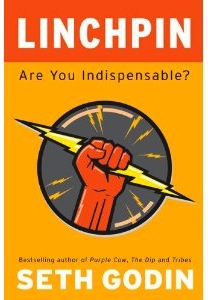
Linchpin Review

LinchpinI was really looking forward to jumping into the book. The first 2/3 to 3/4 had really great thoughts and challenges that I was able to really start to employ (or at least start thinking about in ways I had not previously). Where I did get disappointed was towards the end where it felt like many of the great topics could have been developed and discussed more. It felt like they got short-changed and he was in a hurry to finish the book.
Still very good. One that is probably worth reading several times over.

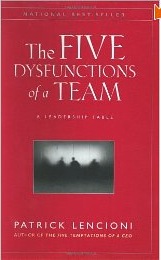
The Five Dysfunctions of a Team: A Leadership Fable

The Five Dysfunctions of a TeamJust finished this one. Great read. First time I’ve read anything from Patrick Lencioni. From what I’ve been told many of his other books have a similar format. He tells a story (the Fable) that is interesting in its own rite, and uses it to set up the lesson(s) to be learned. Then he provides some practical discussions and exercises on how to overcome the Five Dysfunctions of a team. I really enjoyed this and I’m looking forward to adding a few more Lencioni titles to my repertoire. Add this to my “highly recommend” list.

One of my favorite quotes from the book, “If you make everything important, then nothing is important.”