
Be encouraged.
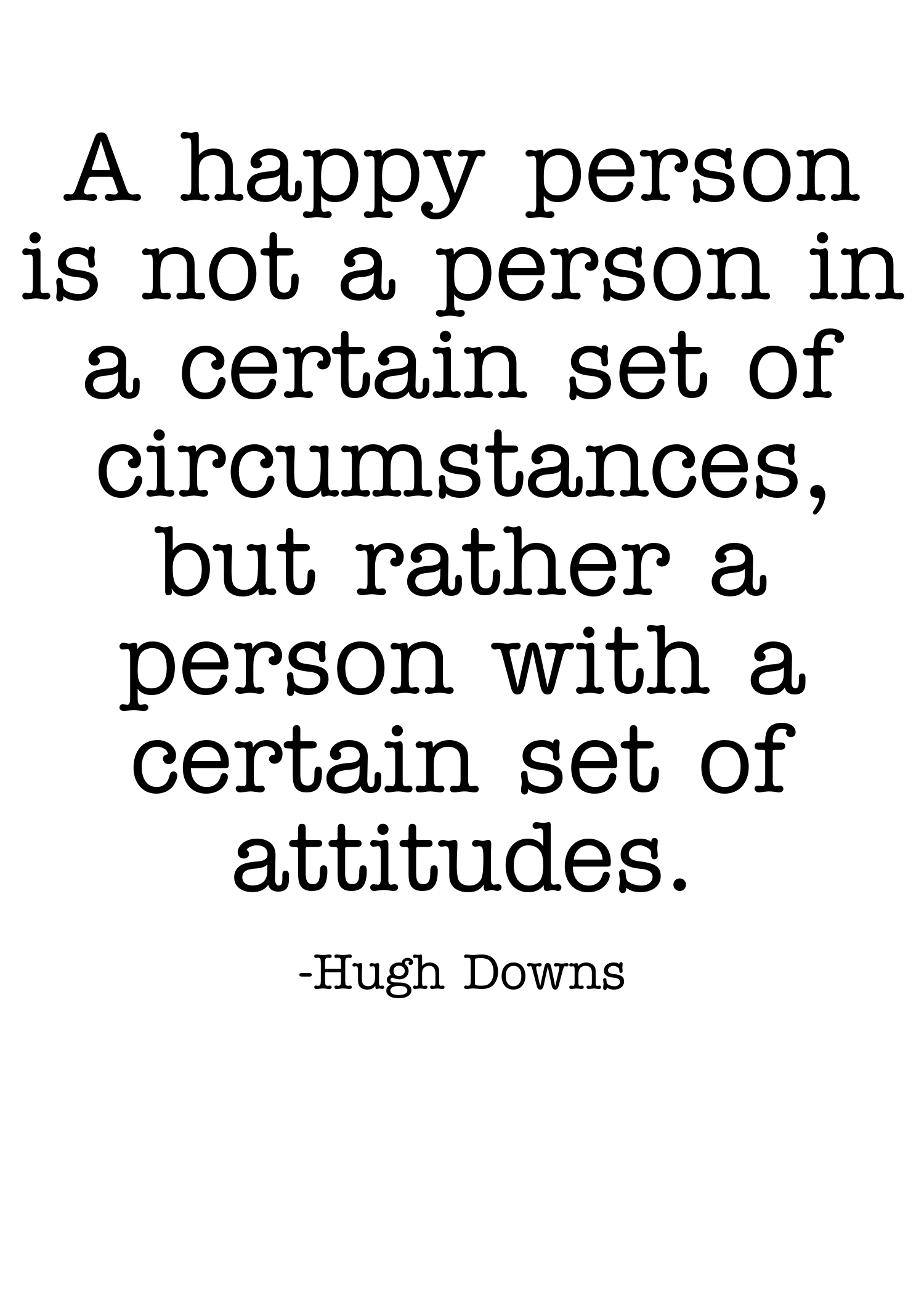
A happy person is not a person in a certain set of circumstances, but rather a person with a certain set of attitudes.
Hugh Downs
Be encouraged.
A happy person is not a person in a certain set of circumstances, but rather a person with a certain set of attitudes.
Hugh Downs

In May of 2022, I heard about Runners World Run Streak. The commitment was to run at least one mile every day from Memorial Day to July 4th. I was excited to use this as the motivation to get back to my running routine, which had gotten lost somewhere between COVID and everything else in my life.
As a kid, I did not enjoy running. I’m not sure why, but I know others have had the same experience. As I got older, something switched, and I really enjoyed running. My regular runs include 2-3 interval runs, tempo runs where I push a bit harder/faster* but still watch my heart rate zones, and an active recovery run. I’ve done a handful of 5K races and a 10K twice. No marathons yet. No half marathons, but maybe 2023, but for now, this is ok for me. Thanksgiving morning will include my first Turkey Trot sponsored by our local YMCA.

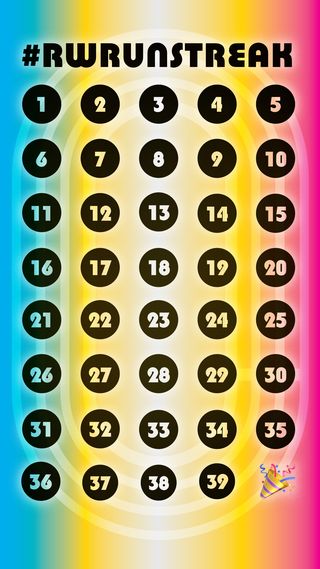
Runners World recently advertised they are starting a Winter Run Streak. Starting Thanksgiving, commit to running at least one mile every day until New Year’s Day – 39 days total. My Summer Run Streak was 73 days. I averaged just over 2 miles per day. After my bout with COVID (and the relentless fatigue that just seemed to hang on after), I finally got to (re)started in October. I’m currently on day 32 and counting.

Neat story, Tim… but what’s your point. Only to encourage you to give it a try. Maybe it will be an opportunity to push yourself. To do something that maybe seems tantamount to climbing Everest. It’s an opportunity to make a commitment – if to no one else, to yourself that this is something you’re going to do for 39 days. That alone will give you a great sense of accomplishment as you walk…run into 2023. There are enough things in the world today that seem intent on knocking us down, encouraging us to think less of ourselves. This is an opportunity for you to take ownership of that narrative and do more than maybe you thought you could. Sure, you can post it on your social if you want the accountability (which was a big deal for me…I deliberated for a long time before I posted “Day 1“…if there’s a Day 1, there’s gotta be a Day 2 – right?), or you can just use the progress chart that Runners World created and celebrate each day of success on your own.
Nearly everything awesome takes longer than you think. Get started and don’t worry about the clock.
James Clear
(*And by “Faster,” I mean faster for me – which is still not fast, but I’m learning to not compare my times to others I follow on Instagram or elsewhere. If you’re interested, two of my favorite runners to follow are mattchoi_6 and kmm_runs and her related store life.of.running.)
Growing up in Oregon, the Oregon Ducks have been my college team. I can root for others – even some from the Pac-12, but the Ducks are my team.
This last week I went to the sold-out Utah v. Oregon game. A late game. A nail-biter. A tad on the chilly side (28 degrees at the end of the game)…Not the prettiest football, but the Ducks pulled out a win through the play of their defense. But that’s not what this post is about…

I presume this is true in all/most stadiums – they have their traditions, songs that are played each week, or each situation. Oregon games open with Coming Home (Oregon) by Mat Kearney. Between the 3rd and 4th quarters, everyone participates in singing along with Shout by the Isley Bros. But there is one song that is the reason for this post. It’s really more of the guitar riff that plays rather than the whole song. It’s the song that plays when it’s 3rd down, and the defense is on the field. “What is this dang song…!?!” Surprisingly, Shazam doesn’t work that great when 54,000+ are screaming “OOOOOOOOOOO” at the top of their lungs, cheering on the defense. It’s a pretty good indicator that it’s loud when you watch gives you a warning that continued exposure to noise at this level can cause hearing damage (gotta love college football). But thankfully, one of the guys I work with has a vast reservoir of little know facts and borderline worthless information immediately accessible for recall… and he’s a few years younger, so he grew up when the song was popular.
The song is Joker and the Thief by Wolfmother (specifically at about the 39-second mark). When you’re standing around with 54,000+ of your closest friends, this riff starts grinding through the PA system, and everyone is yelling – it’s one of my favorite college football experiences.

I’d spent a ton of time trying to figure this out… and not only did my buddy pull the answer seemingly out of thin air, but recently, when 100 previous Google searches had failed me, I came across a post from a few years ago that ALSO had the answer. You can check out the post “The Sounds of Autzen Stadium” by texasbigdawg. The post includes a cool video of the Shout song from what looks like in/near the student section of Autzen.
So, the next time I have to ask the question, “What’s the song…” I can at least come back to this post.
This also stirs the question – what are the songs or traditions that make up your favorite college football stadium experience? I’d love to hear your comments.
For those of you in the US celebrating Thanksgiving in a few days – enjoy. Even though it may not feel like it at times. We have much to be thankful for. Make a choice to look for and choose gratitude.
Until then, enjoy the songs and Go Ducks.
This weekend I ran in the Hearts with a Mission – Homeless 2 Hopeful Super Hero Run. Their mission is to serve homeless and at-risk youth by providing shelter, educational support, mentoring and transition planning with a faith-based approach.
The folks at Quantum supported the event by helping to build the runners kits, prepping my “Captain Quantum” costume, and sponsoring the event. It was a great morning for a beautiful run.
 At Quantum, our five Core Purpose statements are: Be Disruptive, Be Knowledge Givers, Be Experts… on this day, it was all about Be Fun and Be Servants. It’s a great privilege to participate in this event and to work for a company where giving back like this is not only supported but also encouraged
My buddy Dave had his drone on site, shot some footage and built this video.
If this is of interest to you Hearts with a Mission could certainly use your support., or maybe there is a similar organization in your local area that you can support.
#H2H #HeartsWithAMission #Homeless2Helpful
Original post on Harvard Business Review
 In the military, a poorly formatted email may be the difference between mission accomplished and mission failure. During my active duty service, I learned how to structure emails to maximize a mission’s chances for success. Since returning from duty, I have applied these lessons to emails that I write for my corporate job, and my missives have consequently become crisper and cleaner, eliciting quicker and higher-quality responses from colleagues and clients. Here are three of the main tips I learned on how to format your emails with military precision:
1. Subjects with keywords. The first thing that your email recipient sees is your name and subject line, so it’s critical that the subject clearly states the purpose of the email, and specifically, what you want them to do with your note. Military personnel use keywords that characterize the nature of the email in the subject. Some of these keywords include:
The next time you email your direct reports a status update, try using the subject line: INFO – Status Update. And if you need your manager to approve your vacation request, you could write REQUEST – Vacation. If you’re a project manager who requires responses to your weekly implementation report from several people, type ACTION – Weekly Implementation Report. These demarcations might seem obvious or needlessly exclamatory because they are capitalized. But your emails will undoubtedly stand out in your recipient’s inbox, and they won’t have to work out the purpose of your emails. (It also forces you to think about what you really want from someone before you contribute to their inbox clutter.)
2. Bottom Line Up Front (BLUF). Military professionals lead their emails with a short, staccato statement known as the BLUF. (Yes, being the military, there is an acronym for everything.) It declares the purpose of the email and action required. The BLUF should quickly answer the five W’s: who, what, where, when, and why. An effective BLUF distills the most important information for the reader. Here’s an example BLUF from the Air Force Handbook:
BLUF: Effective 29 Oct 13, all Air Force Doctrine Documents (AFDDs) have been rescinded and replaced by core doctrine volumes and doctrine annexes.
The BLUF helps readers quickly digest the announcement, decision, and when the new procedures go into effect. The reader doesn’t necessarily want to know all the background information that led to the decision. He or she likely wants to know “how does this email affect me?” and the BLUF should answer this question every time.
For my corporate job, I don’t use the acronym “BLUF” because it would be unclear to recipients, but I have started leading with “Bottom Line” in bold at the start of my notes. Sometimes, I even highlight the bottom line in yellow so that my point is abundantly clear. Here is an example of a BLUF adapted for corporate use:
Subject: INFO – Working from home
Shannon,
Bottom Line: We will reduce the number of days that employees can work from home from three to one day per week effective December 1st.
Background:
- This is an effort to encourage team morale and foster team collaboration
- All members of the management committee supported this decision
Shannon knows that no response is required because it was marked INFO. She also quickly grasps the information in the email because of the Bottom Line. Because this is a big change in corporate policy, background details are provided to show that the decision is final, supported by management, and intended to result in positive effects for the company.
3. Be economical. Military personnel know that short emails are more effective than long ones, so they try to fit all content in one pane, so the recipient doesn’t have to scroll. They also eschew the passive voice because it tends to make sentences longer, or as the Air Force manual puts it, “Besides lengthening and twisting sentences, passive verbs often muddy them.” Instead, use active voice, which puts nouns ahead of verbs, so it’s clear who is doing the action. By using active voice, you are making the “verbs do the work for you.” Instead of, “The factory was bombed by an F18,” military professionals would say, “An F18 bombed the factory.”
Even though short emails are usually more effective, long emails abound, even in the military. If an email requires more explanation, you should list background information after the BLUF as bullet points so that recipients can quickly grasp your message, like in the above example.
Lastly, to prevent clogging inboxes, military professionals link to attachments rather than attaching files. This will force the recipient to check the website that has the attachment, which will likely provide the most recent version of a file. Also, the site will verify that the recipient has the right security credentials to see the file, and you don’t inadvertently send a file to someone who isn’t permitted to view it.
Here is an email example for corporate use that uses keywords in the subject, bottom line, background bullets, and active voice:
Subject: INFO – Meeting Change
Shannon,
Bottom Line: We scheduled the weekly update meeting for Thursday at 2 PM CST to accommodate the CFO’s schedule.
Background:
- We searched for other available times, but this is the only time that works, and it’s important that you are on the call, so that you can address your P&L.
- CFO will be in Boston on Thursday meeting at an offsite with the management committee.
- He wants to review the financial report that can be found here (insert link) before the call.
By adopting military email etiquette, you will introduce a kernel of clarity to your correspondence and that of your colleagues and clients.

Coach John Wooden often said, “The biggest mistake coaches make is they over-coach.” This is absolutely true for formulating arguments and presentations. The biggest mistake people make is trying to over-teach. Other people are not as expert as you on your subject, and they do not need to be. Avoid the Too Simple Syndrome, and show confidence in the simplicity.
A client of mine had the task of convincing some higher-ups of the need for an expensive, but necessary, software for his firm. The leaders who had to sign off on the purchase had little knowledge of the software or the process that the software would simplify. My client prepared and polished a presentation explaining the ins and outs of the software, and why it would greatly improve the efficiency and profitability of the firm.
Having been so diligent to ensure that every detail was carefully outlined and explained, my client was surprised and frustrated to find that many people asked questions and expressed doubts that were clearly covered in his presentation. He said to me, “These people just don’t listen. It’s so obvious that the firm needs this software, but they want to kill the project anyway.”
My client made the common mistake of assuming that everyone else is as expert as you on your area of expertise. It seems so obvious, but so many people grossly overestimate the level of understanding from other people. Once we become expert on a subject, it is difficult to remember what it was like to be a novice. It is incredibly common to make the mistake of trying to sway others to your argument by educating them on the complexities, thinking they will follow your logic and reach the conclusion you want. This mentality might seem to make sense, as it is beneficial for others to know that you have a deep level of understanding on a topic, but trying to bring others into too deep a level is a losing battle.
Follow these three simple rules to increase your leadership communication:
1. Identify Your “3 Most Important”
Stick to the Rule of 3. Specifically, allow yourself to cover no more than 3 major points, and the less the better. Give no more than 3 pieces of information within each of those major points. If you can not explain your argument using the Rule of 3, then you need to go to work to understand it more fully.
2. Highlight the “1 Must”
Once you have your 3 main points, clarify the 1 most important point of the three that your audience must take away from your interaction.
3. When In Doubt “Delete”
The more you say, the less believable you become. Highly successful people work on being precise with their words and their arguments.
Forcing yourself to simplify your presentation will allow you to understand it more deeply yourself.
When my client significantly simplified his presentation into the “3 Most Important” and “1 Must” and deleted all unnecessary sentences, words, and letters people jumped on board. He did the work for his audience of simplifying rather than trying to get everyone else up to his level of understanding.
It worked for him, and it will work for you as well
I was recently remind of a great story by Pastor Alistair Begg. With a bit of help from some great folks at @TruthForLife, I was able to find the story. A great reminder with a great truth.
 When I was a small boy my father use to take me to a number of events that I didn’t want to go to. Not least of all the singing of male voice choirs. And it always seem to happen on a Saturday afternoon. And as part of salve to my reluctance he would he would allow me to go into a confectionery store and purchase sweets or candies as you would say. And those were the days when they still had them in the big jars and they meted them out in 2 ounces or 4 ounces or whatever it was and so you pointed up and the lady got it down and then she poured it in the tray and weighed it and put it in a bag and she gave it to you. So there was a transaction involved.
And I remember particularly one place on a Saturday afternoon. I must have been all shined up and ready for action. Brill cream on the hair. Shaved up the back of my head. I looked like I was ready for the Army.
There were, I remember, a number of people in the store. I don’t know what happened in the shop, but it must have been that that somebody said complimentary things about this shiny faced, wee chap that was waiting for his sweets.
And when the shop cleared and it was just the lady and myself, this lady, who I don’t know, I met her once in my life, as she handed me the bag of candy, she lent over the counter, and she said, “Sonny, flattery is like perfume – Sniff it, don’t swallow it.”
You can hear the full teaching at: “The Pulpit – It’s Power & Pitfalls”
An abbreviated version of the quote is also available at the teaching “Betrayal and Denial”
What are some of your favorite Alistair Begg quotes or stories?
 The inspiration of a noble cause involving human interests wide and far, enables men to do things they did not dream themselves capable of before, and which they were not capable of alone. The consciousness of belonging, vitally, to something beyond individuality; of being part of a personality that reaches we know not where, in space and time, greatens the heart to the limit of the soul’s ideal, and builds out the supreme of character.
Joshua Lawrence Chamberlain
BY LES KOLLEGIAN
Your company’s growth can feel like a complex equation. Add a consultant here, subtract a client there, divide up this budget and hope for the best. The numbing reality is that the choices we make, more often than not, lead us to unanticipated outcomes.
At Jacob Tyler, we’ve been down the rabbit hole and been forced to choose between the proverbial “red and green pill.” We know what it’s like to be a small business craving a growth spurt. Now that we’ve experienced the growth, through our success and failures, we’ve stumbled upon fundamental lessons on what not to do. These lessons, as luck would have it, have played a crucial role in building our company. Avoid these five pitfalls for stress-free, steady, and successful growth.
Small businesses often suffer from the “chicken/egg” syndrome. You don’t have the money to hire until you have the project set and when you finally have the project and money, you don’t have the staff to support the client. What do you do?
You may consider making a quick hiring decision. I won’t say this never works out, but many times, the person you hire, because you’re in a rush, isn’t the right fit for the position you’re trying to fill. Then you’ll spend extra time nurturing this employee to “fit” the required position. Save yourself the headache and repeat after me: slow to hire, fast to fire.
Instead of solving your problem with a quick hire, develop a hiring process that builds your pipeline of qualified applicants. Keep position descriptions up on your website and have a system in place for when you’re ready to push for new applicants. Then follow a vetting process. Know what you’re looking for, interview and interview again.
Taking this time upfront will save you time later. When you’re looking for that next hire, look for the qualities the previous employee (that quick hire we all regret) was lacking and be patient for the right person to come through your door.
The common denominator with most small businesses is lack of cash flow. Sometimes this can be a recipe for a hiring disaster because your inclination is to bring on a junior level person with little experience because you can get them at the perfect price. Well, you get what you pay for.
At Jacob Tyler, we’ve found that a senior level employee who makes roughly $75,000 a year can do almost six to eight times the work of a junior level employee making $20,000 a year and with less supervision. It’s important to consider the cost savings not only for the cost of work, but the cost of time from management, revisions, and mistakes. In order to grow your business, you need to be doing what you do best and that does not mean spending the majority of the day teaching or fixing unnecessary issues.
Instead, invest in your talent. Why? Because investing in your talent is an investment in your brand. As a brand communications agency, we know the value of a brand and advise our clients to think of their brand positioning as the key element to ongoing success and growth. Your people not only represent your company, but they produce for your company. Simply put, your people are your brand. You wouldn’t want to devalue your brand, so don’t skimp on the quality of the employees you hire.
Handling and allocating expenses is really tough for small business owners. It’s very easy to lose track of where your money is going. Why? Clients don’t always deliver according to your cash flow plans.
As a result, sometimes funds are moved from where they should be allocated to perhaps your credit card debt. Over time, this can spiral out of control making it difficult to recover. As time goes by, you realize you’ve potentially racked up more debt and the money you’re making never seems to make it to the right place including your pocket. Instead of falling into this vicious cycle, focus your attention on developing a budget.
In order to budget properly, ensure a controller has an eye on your bottom line and prepares monthly financial reports for your review. This type of administrative and financial work won’t necessarily improve your bottom line, but it will help you anticipate financial bottlenecks and pinches ahead of time.
Oftentimes, as small business owners, whether you work alone or have employees, we stress about payroll, vendor payments, bills, and more. Then, the perfect client prospect walks through the door. Why perfect? Because he has money. I can tell you from firsthand experience that just because he can pay, does not mean the business will be profitable. In fact, the wrong client can cost you much more time than money. When meeting with new clients, it’s important to look for the warning signs such as:
While taking on a client will get you the quick pay day, it may cost you far more in time and in the long run, a major loss in profits. Not to mention, this client can waste your valuable time that you should be spending on searching for ideal clients.
Take the time to interview your potential clients in depth and make sure they know what it will be like to work with you. Once they understand, make sure your contracts are iron clad complete with expectations for rounds of revisions, changes in scope and additional requests. Otherwise, these issues will lead to unnecessary additional meetings that distract you from your daily goals.
It’s easy to fall into the trap of wanting to be everything to everyone. It makes sense, right? The more services you offer, the more money you can make. The problem is that you better be good at everything you do. The saying about being a “jack of all trades, master of none” is not a compliment.
Whether you’re a web designer or a tax attorney, make sure you’re the master of your core strength. This will enable you to be recognized as an expert in your field and help you to build your business brand. Be the best at a few concentrated activities and stay focused on investing in those strengths.
Furthermore, a core strength of your company can and should be innovation. How are you providing your clients with new value? How are you pursuing the next big thing? Stay connected with your clients and continue to listen to what they want and learn how to better serve them through innovation. Discover a blue ocean and you will make the competition irrelevant.
While these five lessons are great examples of lessons that we’ve learned at Jacob Tyler that have allowed us to get to where we are today, part two will provide five additional lessons for CEOs to keep in mind as they strive to grow their businesses.
—Les Kollegian is the CEO at Jacob Tyler, an award-winning, full-service, brand communications agency specializing in brand development, print collateral, web design, web development, product design and online marketing. Contact Les atles@jacobtyler.com.
I know much has been written on this in the past, but little things like this always fascinate me. (See the piece below written by Michael Zhang at PetaPixel as well as the video on break.com, posted by Bob Zamuda.)
I was recently reminded that advertisements for watches always show the time at 10:10 (give or take a few minutes). With watch ads running rampant with just weeks remaining before Christmas, it’s a fun one to notice (but I’m kinda “nerdy” that way…)

Have you ever noticed that the watches and clocks found in product photographs and advertisements usually show the time 10:10? If you haven’t, pay attention the next time you’re flipping through a publication and come across a watch ad—the rule is almost always true.
If you have noticed this, do you know why 10:10 is the default time for watch photographers?
According to the New York Times, the main reason is quite simple and obvious: aesthetics. There are a number of visual advantages to having the hands set at the 10:10 positions.
One is that the hands are kept from overlapping. Having them on both sides of the watch face ensures that the hands themselves are visible and can be appreciated.
The position also allows the hands to look nice on the face of the timepiece. The 10:10 position is symmetrical, and the human brain tends to appreciate symmetry and orderliness.

Some product photos of watches foun
Another reason is that key details on the face of the watch or clock usually remain visible at 10:10. The logo of the manufacturer is usually found under the 12, and sometimes next to the 3-, 6-, and 9-o’-clock positions. Logos found under the 12 are nicely framed by 10:10 hands.
Finally, the 10:10 hands look “happy” due to the fact that the hands look like a smile (or like a “V” as in “victory”). The NYTimes reports that Timex used to use the time 8:20 in their product photos, but eventually decided to turn that “frown” upside-down.
There are a number of urban legends regarding the 10:10 time floating around in the world. Many of them attribute it to a historic event (e.g. Lincoln/JFK assassinations, the dropping of the atomic bombs), but there isn’t any truth behind those explanations.
 Be encouraged